|
12.1.
AT - HyCentA, Hydrogen Research Centre Austria HyCentA Research GmbH is the only extra-university research institution in Austria exclusively dedicated to research and development on green hydrogen technologies. We conduct joint projects with leading companies and scientific partners on the production, distribution, storage and application of renewable hydrogen.
|
|
12.2.
AU - Australian Hydrogen Research Network (AHRN) A community of researchers and interested stakeholders supporting the emerging hydrogen industry in Australia. We foster excellence in hydrogen-related research through an ongoing program of seminars and knowledge-sharing activities.
|

|
12.3.
AU - Australian National University (ANU) Publications on aspects of the Hydrogen economy transition.
|

|
12.4.
AU - Australian Renewable Energy Agency (ARENA) The Knowledge Bank is an open-source library of reports, studies, multimedia and tools that provide guidance and learnings to benefit future renewable hydrogen energy projects.
|

|
12.5.
AU - Central Queensland University Centre for Hydrogen and Renewable Energy (CQUniversity CHRE) CHRE was developed to provide world-class research, training and support to the emerging hydrogen and renewable energy industries in Central Queensland. Our vision is to cultivate world-class expertise to empower our industry partners and new industry clients as they embrace the transition to hydrogen and other clean energy.
|

|
12.6.
AU - Commonwealth Scientific and Industrial Research Organisation (CSIRO) Publications from CSIRO on Hydrogen Fuel Cell research and development of renewable energy solutions. Hydrogen Knowledge Centre
|

|
12.7.
AU - Deakin University Hydrogen Hub The Deakin Hydrogen Hub is an Australia-leading hydrogen research, testing, validation and training facility providing bespoke hydrogen infrastructure and equipment. Located at Deakin’s Warrnambool Campus in Victoria’s south west, the hub has a wide range of equipment, facilities and capabilities targeted at achieving zero carbon.
|

|
12.8.
AU - Geoscience Australia / Monash University - Hydrogen Economic Fairways Tool (HEFT) HEFT was developed by Geoscience Australia in collaboration with Monash University & is based on an open-source economic model that maps the economic viability of H2 production opportunities across Australia.
|

|
12.9.
AU - Monash University - Monash Hydrogen Energy Research Node The Monash Hydrogen Energy Node aims to assemble skills and knowledge across the hydrogen value chain to tackle complex, systems-level challenges across technological, economical, socio-political and legal dimensions.
|

|
12.10.
AU - Royal Melbourne Institute of Technology (RMIT) Publications from the RMIT Sustainable Hydrogen Energy Laboratory (SHEL) that pioneers research and development on hydrogen energy solutions.
|

|
12.11.
AU - Swinburne Institute of Technology / Victorian Hydrogen Hub Led by Swinburne University of Technology in partnership with CSIRO and Germany’s ARENA2036 factory, the Victorian Hydrogen Hub (VH2) brings together researchers, industry partners and business to drive the implementation of the hydrogen economy.
|

|
12.12.
AU - University of Adelaide Institute for Sustainability, Energy and Resources Hydrogen Research ISER's Hydrogen Research specialists offer a diverse scope of expertise to support the latest advancements in this fast-moving field of global green energy.
|

|
12.13.
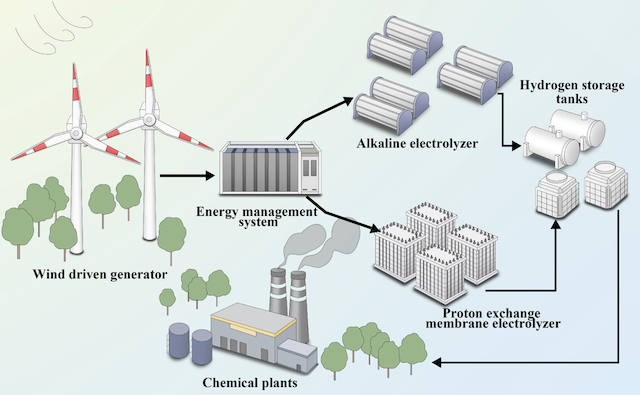
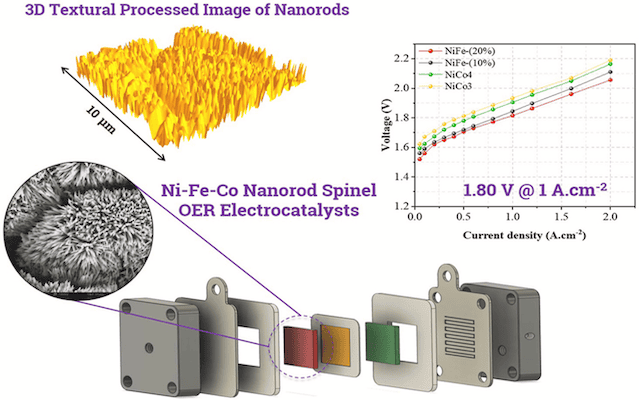
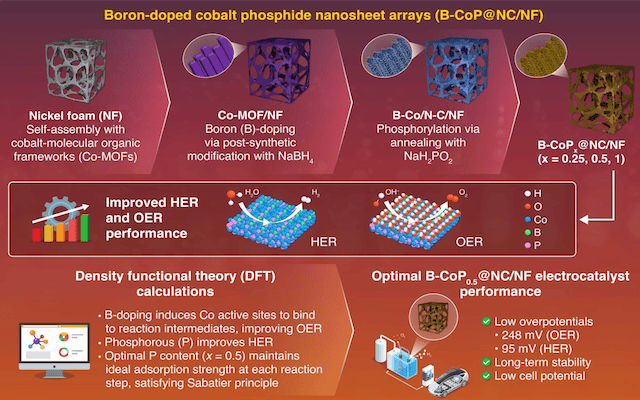
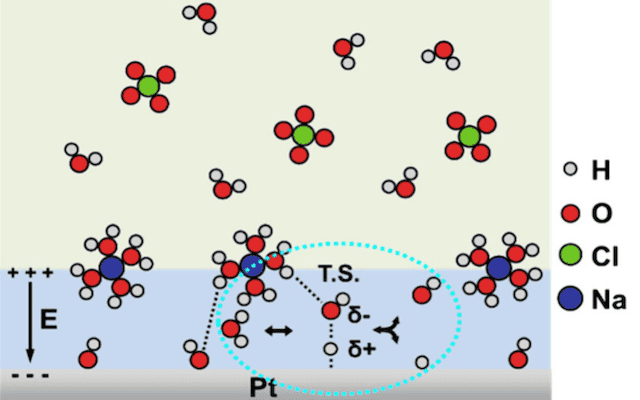
AU - University of Melbourne, Department of Chemical Engineering - Library Green hydrogen production is a pivotal solution in the transition towards sustainable energy systems due to its potential to store and deliver renewable energy in a versatile, clean form. Producing hydrogen through water electrolysis, where electricity from renewable energies splits water into hydrogen and oxygen, offers a zero-carbon emission pathway critical for decarbonizing various industrial sectors and transport systems. However, the widespread adoption of green hydrogen is currently hindered by two primary challenges: high production costs and the need for efficient electrocatalysts.
|

|
12.14.
AU - University of NSW Hydrogen storage and battery technology group Research focuses on fabrication and storage optimization of a novel porous solid-state hydrogen storage material in fuel cell integrated systems to reduce the hydrogen storage pressure to only 10MPa, six times less than current market technology.
|

|
12.15.
AU - University of Queensland - Dow Centre Green Hydrogen Production UQ Dow Centre research includes Sustainable production of green hydrogen from wastewater and Co-production of hydrogen, hydrogen peroxide, and ozone from water/wastewater.
|

|
12.16.
AU - University of Sydney, Merlin Energy Research Group At Merlin, we have developed practical technologies that allow large amounts of hydrogen to be safely stored in small volumes within certain materials such as metal hydrides.
|

|
12.17.
CA - Canada National Research Centre Advanced Clean Energy program: Hydrogen The hydrogen pillar of the NRC's Advanced Clean Energy program develops technologies with collaborators to produce, distribute and use zero-greenhouse-gas emissions hydrogen. The program enables a new generation of zero-carbon fuels and applications, to allow Canada to meet its 2050 net-zero emission targets and diversify Canada's future energy mix, particularly in hard-to-abate sectors.
|

|
12.18.
CA - University of Alberta - Hydrogen UoA Future Energy Systems funds researchers to develop new energy technologies and integrate them into our current infrastructure. With intensive support, our researchers are mitigating the environmental impacts of current and future energy systems, and better understanding the influence of energy transition on our environment, economy and society.
|
|
12.19.
CA - Universite du Quebec - Hydrogen Research Institute The HRI's mission is to accelerate the energy transition by mobilizing integrated multidisciplinary expertise, ranging from fundamental sciences to applied sciences and engineering, in order to generate breakthrough innovations in advanced materials and energy technologies.
|

|
12.20.
CH - ETH Zurich Electrochemistry Research is focused on the development and in-depth understanding of materials, processes and devices for the conversion of renewable energy into electricity or chemical energy carriers. Especially in the context of a sustainable energy system utilizing hydrogen as an energy carrier its electrochemical energy conversion is of particular importance.
|

|
12.21.
CH - Frontiers Frontiers is the 3rd most-cited and 6th largest research publisher and open science platform. Our research journals are community-driven and peer-reviewed by editorial boards of more than 260,000 top researchers.
|

|
12.22.
CH - MDPI Hydrogen Journal MDPI has supported academic communities since 1996. Based in Basel, Switzerland, MDPI has the mission to foster open scientific exchange in all forms, across all disciplines.
|

|
12.23.
CH - The Paul Scherrer Institute PSI PSI designs, develops, constructs and operates large-scale and complex world-class research facilities and places them at the disposal of the Swiss and international research community. PSI's own research is concentrated on areas in which experiments on these large research facilities offer particular advantages. This ensures a competitive edge for PSI researchers, because they can use their own in-house facilities for their studies.
|

|
12.24.
CN - Beijing Institute of Technology The Beijing Institute of Technology (BIT) is actively researching and developing hydrogen technology, including hydrogen internal combustion engines and hydrogen fuel cell technology, with a focus on both military and civilian applications.
|

|
12.25.
CN - Dalian Institute of Chemical Physics (DICP) DICP Chinese Academy of Sciences has established a long track record of major academic and industrial accomplishments in catalytic chemistry, chemical engineering, chemical lasers, molecular reaction dynamics, organic chemistry, modern analytical chemistry and biotechnology.
|

|
12.26.
CN - Tsinghau University, Green Hydrogen Technology and Applied Research Center (TU) TU is committed to the research and application of key technologies for high-quality and sustainable development of green hydrogen industry, focusing on key orientations such as the development of electrochemical energy materials & devices, hydrogen energy system conversion, development of multi-energy terminal IOT technology and green hydrogen technology & application, conducting key technical research & services centering on the development & application of materials, devices, systems and engineering of the coupling between renewable energy and hydrogen energy, and promoting the deep coupling and sustainable development of renewable energy and hydrogen energy.
|

|
12.27.
DE - DLR DLR is active in all areas of hydrogen research and along the entire process chain – from production to storage and use. With the experience gained over several decades, its researchers are working to make it widely usable.
|

|
12.28.
DE - Fraunhofer ISE For over 30 years, we have been supporting the development of climate-neutral industrial processes and sustainable mobility with the development of hydrogen technologies.
|

|
12.29.
DE - Hyfindr Publications on hydrogen system components, materials and other hydrogen related equipment.
|

|
12.30.
DE - Institute for a sustainable Hydrogen Economy, IHE IHE at Forschungszentrum Jülich forms the core of the Helmholtz Cluster for a Sustainable and Infrastructure-Compatible Hydrogen Economy, one of the largest structural change projects in Germany. IHE conducts basic research in the field of hydrogen storage and transport. The focus is on technologies for chemical hydrogen storage using liquid or easily liquefiable hydrogen carriers that can be handled in a similar way to conventional fossil fuels.
|

|
12.31.
DE - Karlsruhe Institute of Technology, KIT About 1500 researchers of KIT are working on a reliable, secure, and sustainable energy system for future climate-neutral society. At one of the biggest energy research centers in Europe, they tackle a project that is of fundamental importance to the existence and further development of our society: The transformation of our energy system. Interdisciplinary work within research and engineering projects is dedicated to physical and virtual infrastructures, new technologies, and to extending basic knowledge on all energy sources needed by our industry, households, services, and mobility.
|

|
12.32.
DE - Max Planck Institute The Max Planck Society is committed to contributing to a future worth living in, both through its research and its practical actions. It wants to be a role model for how research can be conducted responsibly, sustainably and in a climate-friendly manner.
|

|
12.33.
DE - Springer Nature Springer Nature works closely with a large global community of academic researchers and educators who, through their work, want to disseminate their ideas, solve problems and leave the world better than they found it.
|

|
12.34.
DE - Technical University Munich Institute of Sustainable Mobile Powertrains, At TUM we research technical solutions for the sustainable use of energy in mobility as a contribution to a future worth living. For this, we look at the entire range of drive systems, from internal combustion engines operated with climate-neutral fuels to electric powertrains and hydrogen fuel cells.
|

|
12.35.
DK - Aalborg University, Denmark, AAU Research Hydrogen and Electro-fuels research group The Hydrogen and Electro-fuels research group focuses on the entire hydrogen and electro-fuel value chain, from production to utilization. We develop hydrogen technologies with industry, focusing on electrochemical and thermochemical reactors, from micro to application scale.
|

|
12.36.
DK - DTU Orbit, Denmark, DTU Orbit is the official research database of the Technical University of Denmark, DTU, provided by DTU Library. DTU Orbit provides an overview of research output, i.e. publications, to which DTU employees have contributed.
|

|
12.37.
ES - Spanish National Hydrogen and Fuel Cell Technology Testing Centre (CNH2) CNH2 is equipped with 13 laboratories and 5 additional facilities that carry out their activities in the following areas: Hydrogen production, Storage and distribution of hydrogen, Hydrogen transformation, Hydrogen technology applications, Regulation, certification and safety guidelines, and Technology implementation.
|
|
12.38.
ES - Specific Centre for Hydrogen Research of the UPC (CERH2) The CERH2 mission is the decarbonization of the energy system through the hydrogen energy vector at the following levels: Research on hydrogen processes and systems. Development of new technologies and solutions for hydrogen powered systems, Technology transfer to society and in particular to companies in the field, and Implementation of pilot plants. The CER-H2 aims to carry out a differentiated and relevant R+D+I (Research, Development and Innovation) around the hydrogen vector, within an environment of creativity and innovation of scientific, technological and professional knowledge.
|
|
12.39.
EU - European Hydrogen Observatory (EHO) EHO is an initiative by the Clean Hydrogen Joint Undertaking, the European Hydrogen Observatory (former Fuel Cells & Hydrogen Observatory) is an open platform providing data and up-to-date information about the European hydrogen sector.
|

|
12.40.
EU - European Space Agency (ESA) ESA is Europe’s gateway to space. Its mission is to shape the development of Europe’s space capability and ensure that investment in space continues to deliver benefits to the citizens of Europe and the world.
|
|
12.41.
EU - Hydrogen Europe Research Publications from the European scientific community involved in the development of a new, industrial ecosystem based on hydrogen and committed to moving towards a circular, carbon-neutral economy.
|

|
12.42.
EU - Joint Research Centre Publications Repository The JRC Publications Repository is the public access to all publications of the Joint Research Centre. It offers access to state-of-the-art science performed by the JRC to the wider scientific community, with full-text and open access. It is updated on a daily basis, including most recent outputs.
|

|
12.43.
EU - Zenodo In support of its research programme CERN has developed tools for Big Data management and extended Digital Library capabilities for Open Data. Through Zenodo these Big Science tools could be effectively shared with the long-tail of research..
|

|
12.44.
FI - Aalto University H2 Innovation Center Hydrogen open source search on technical materials relating to hydrogen evolution, storage, distribution, and fuel cells.
|

|
12.45.
FI - Centre for Research on Energy and Clean Air (CREA) At CREA we use scientific data, research and evidence to support the efforts of governments, companies and campaigning organisations worldwide in their efforts to move towards clean energy and clean air.
|

|
12.46.
FI - University of Helsinki Hydrogen Hub We are addressing current and future challenges in the green hydrogen economy. Our Hub encompasses the Department of Chemistry, Physics, and Geosciences and Geography.
|

|
12.47.
FR - CEA-Liten CEA-Liten research is guided by energy efficiency and the circular economy, addresses the pillars of the energy transition: solar energy, batteries, hydrogen, and sustainable chemicals and fuels.
|
|
12.48.
FR - French National Research Network on Hydrogen Energy The French National Research Network on Hydrogen Energy (FRH2) brings together 30 laboratories with 300 well known researchers (CNRS researchers, faculty members and engineers) actively involved in the hydrogen sector.
|

|
12.49.
FR - IFP Energies nouvelles (IFPEN), Hydrogen IFPEN is a major player in research and training in the fields of energy, transport and the environment. From scientific concepts in fundamental research to technological solutions in applied research. IFPEN is active in the production, storage, transport and various energy uses of decarbonized H2, thereby supporting the development of the associated industrial sector.
|
|
12.50.
IN - Centre for Fuel Cell Technology, International Advanced Research Centre for Powder Metallurgy and New Materials The major objective of the Centre is to develop Polymer Electrolyte Membrane fuel cells (PEMFC), one of the low temperature fuel cells, in its entireness and demonstrate its application in Decentralised power generation systems and transportation applications. The work includes several aspects of materials development, stack design & engineering, balance of system development, system design and engineering and carrying out field trials.
|
|
12.51.
INT - International Energy Agency Hydrogen Technology Collaboration Programme IEA Hydrogen TCP accelerates the development and deployment of safe, sustainable hydrogen technologies worldwide. Our vision is a future where clean, affordable hydrogen plays a key role across all sectors of the global energy system. By coordinating multinational research, development, and demonstration activities, the Hydrogen TCP fosters innovation, drives knowledge exchange, and enables impactful solutions to support decarbonization, energy security, and economic growth.
|

|
12.52.
INT - International Journal of Hydrogen Energy A central vehicle for the exchange and dissemination of new ideas, technology developments and research results in the field of Hydrogen Energy between scientists and engineers throughout the world.
|

|
12.53.
JP - Advanced Industrial, Science and Technology, Fukushima Renewable Energy Institute, Hydrogen Energy Carrier Team Developing technologies for storing and utilizing large amounts of renewable energy that will help solve several energy issues facing Japan.
|

|
12.54.
JP - Kyushu University, International Research Center for Hydrogen Energy Kyushu University aims to become an institution that "drives social change with integrative knowledge". In November 2021 we were selected as a Designated National University Corporation and our aim is to be an institution offering the highest global standards of education and research, so that we can contribute to designing the ideal society of the future and solving societal issues.
|

|
12.55.
JP - School of Science The University of Tokyo (UTokyo) The central mission of the School of Science is to conduct education and research in order to understand further the truths of nature, to expand and develop the frontiers of knowledge, and to hand down such knowledge to future generations.
|

|
12.56.
JP - Tokyo University of Science (TUS) The Mission of the Tokyo University of Science is to educate people who have the ability to contribute to society. Researchers from TUS have developed a novel hydrogen evolution catalyst, bis(diimino)palladium coordination nanosheets, that offers platinum-like efficiency at a fraction of the cost.
|

|
12.57.
JP - University of Yamanashi, Clean Energy Research Center, Division of Fuel Cell Research The Division of Fuel Cell Research has been promoting fundamental research striving for higher performance and practical uses of polymer electrolyte fuel cells for automobiles, household use, and portable devices. Comprehensive studies, such as new materials, reaction analysis and system evaluations, have been developing. In addition, polymer electrolyte water electrolyzers using proton or anion conductive membranes have been investigated.
|

|
12.58.
KR - Korea Advanced Institute of Science and Technology, KAIST Visit the KAIST Research Portal, Pure, to explore research profiles and detailed research performances of KAIST faculty members. Powered by the Scopus database, Pure provides integrated access to comprehensive research information across the university.
|

|
12.59.
KR - Korea Institute of Energy Research Future Energy Research Division conducts researches on H2 generation, storage, transportation, and utilization to realize a future energy society, focusing on the development of fuel cell technologies represented by generation, storage, and use of H2, an eco-friendly source of energy with economic benefits obtained by coal fuels and water.
|

|
12.60.
MY - Universiti Teknologi Malaysia - Centre of Hydrogen Energy (CHE), CHE vision is to be a leading institute for R & D and innovation in H2 related technologies and to develop and deploy H2 related technologies into the market with the relevant human capital.
|

|
12.61.
NL - TU Delft hydrogen Platform The goal of the TU Delft hydrogen Platform is to bring together the researchers, research infrastructure and formulate common research questions. The hydrogen Platform facilities the researcher in the field with acquiring the necessary funds for their research. We aim for a recognizable role of TU Delft in the energy transition as a Hydrogen-Accelerator..
|

|
12.62.
NL - Elsevier ScienceDirect From foundational science to new and novel research, discover our large collection of Physical Sciences and Engineering publications, covering a range of disciplines, from the theoretical to the applied.
|

|
12.63.
NL - Elsevier ScienceDirect Journal of Green Technologies and Sustainability This Journal encourages and promotes interdisciplinary research and development to important technological and theoretical developments in greentech and sustainability issues.
|

|
12.64.
NL - TNO: Netherlands Organisation for Applied Scientific Research Overall aim is to develop and promote hydrogen technology with Dutch companies, cooperating parties including TNO have set clear goals in the HyScaling project. One of those goals is the need for electrolysers with better performance to produce green hydrogen.
|

|
12.65.
NO - IFE Hynor The IFE Hynor laboratories offer the possibility to perfrom research on water electrolysis and fuel cell stacks and systems. In addition to do experiments on the reforming of methane (CH4) rich gases to hydrogen with an integrated process for CO2-capture using a sorption enhanced reforming pilot plant.
|

|
12.66.
NO - Norwegian University of Science and Technology NTNU NTNU Team Hydrogen is a team of world experts on hydrogen energy and is the largest hydrogen R&D cluster in Scandinavia. The team consists of professors and researchers from different disciplines, departments and faculties across NTNU that works within the Hydrogen R&D value chain.
|

|
12.67.
NO - SINTEF Research Area Hydrogen SINTEF conducts research into important areas within the clean hydrogen value chain from production to transport, storage and end use. Knowledge of these areas provides Norway with a golden opportunity to develop new green industry that the world will need in order to beat the climate crisis.
|

|
12.68.
SA - Hydrogen South Africa, HySA HySA comprises three Centers of Competence: HySA Infrastructure, HySA Systems, and HySA Catalysis, each focusing on different aspects of the hydrogen value chain. The programme aims to position South Africa as a key player in the global hydrogen economy and contribute to the country's energy security and industrial development.
|
|
12.69.
SE - Luleå University of Technology - Centre for Hydrogen Energy Systems Sweden (CH2ESS) CH2ESS is a research and knowledge initiative at Luleå University of Technology with a focus on hydrogen use in industrial processes and energy systems, in close collaboration with Swedish industry.
|

|
12.70.
SG - Nanyang Technological University Singapore, Energy Storage, Hydrogen & Fuel Cells The team focuses its research efforts in hydrogen generation, storage and transport, and end-uses. Key areas include Advanced materials and catalysts, System, market and feasibility analysis, and Technology verification to support the research efforts.
|

|
12.71.
SG - National University of Singapore - Centre for Hydrogen and Carbon Innovations Research site focus promotes cutting-edge R&D advancements in H2 production, storage, and utilization; and fosters collaborations with industries, academia, and agencies to drive Hydrogen & Carbon innovations.
|
|
12.72.
TW - Taiwan Hydrogen Cluster Empowering Hydrogen Innovation - Leading the Charge Towards a Sustainable Hydrogen Future in Taiwan. The Center’s research spans the full hydrogen value chain — from production, storage, and utilization to energy system integration, safety, and public engagement.
|

|
12.73.
UK - Geological Society Publications - Lyell Collection Research site search "hydrogen" - the Lyell Collection represents one of the largest integrated collections of online Earth Science literature available.
|

|
12.74.
UK - IGEM, Hydrogen Knowledge Centre The Hydrogen Knowledge Centre is a digital repository of research and resources, designed to support those interested in advancing their understanding of hydrogen including the latest technical and policy developments both nationally and internationally.
|

|
12.75.
UK - Imperial College London Centre for Energy Policy and Technology ICEPT provides internationally recognised interdisciplinary research, consultancy and postgraduate training. ICEPT works at the interface between technology and policy to provide objective research, analysis and policy advice to governments, industry, NGOs, international organisations and other stakeholders..
|

|
12.76.
UK - Royal Sociaety of Chemistry RSC develop, recognise and celebrate professional capabilities. We bring people together to spark new ideas and new partnerships. Noting Hydrogen is an essential element for life. It is present in water and in almost all the molecules in living things.
|

|
12.77.
UK - TheIET.ORG The Institution of Engineering and Technology Wiley - Search "hydrogen" => research developments -> we inspire, inform and influence the global engineering and technology community to engineer a better world.
|

|
12.78.
UK - Science X / PHYS.ORG Search "hydrogen + energy" => Daily science news on research developments, technological breakthroughs and the latest scientific innovations.
|

|
12.79.
UK - University of Birmingham Birmingham Centre for Fuel Cell and Hydrogen Research - The Centre focuses on research and development, applications and demonstrations of fuel cell and hydrogen systems and technologies.
|

|
12.80.
UK - University of Cambridge The University of Cambridge, are developing low-cost light-harvesting semiconductors that power devices for converting water into clean hydrogen fuel.
|

|
12.81.
UK - University College London, Electrochemical Innovation Lab Based in the Department of Chemical Engineering, the Electrochemical Innovation Lab is a centre for accelerating impact, innovation, enterprise and research in electrochemical engineering.
|

|
12.82.
UK - University of Oxford Imagine a clean, abundant energy source trapped beneath our feet, one that could significantly advance the journey to net-zero carbon emissions. Natural hydrogen, long overlooked as a viable energy resource, is emerging as one of the most exciting frontiers in sustainable energy — and Oxford University is positioned firmly at the forefront of this global pursuit.
|

|
12.83.
US - American Chemical Society (ACS) pubs.acs.org ACS Publications’ commitment to publishing high-quality content continues to attract impactful research that addresses the world’s most important challenges.
|
|
12.84.
US - Argonne National Laboratory, Fuel Cell and Hydrogen Storage System Modeling Our fuel cell research extends from nanometer scale to components and systems, and are focused on performance, durability, and cost. We are collaborating with other groups at Argonne to characterize the microstructure of electrodes at the Advanced Photon Source; develop methods to refine the microstructure by combining data from other techniques.
|

|
12.85.
US - Caltech, Xiang Research Group Xiang's research team, as part of the DOE HydroGEN Benchmarking project, is working on Protocols and Best Practice documents on advanced water-splitting technologies, including high/low temperature electrolysis, photoelectrochemical and solar thermochemical waters splitting.
|

|
12.86.
US - Cell Press We innovate to enhance discoverability, put research in context, and make it more actionable. Global visibility ensures that important research is read, used, and talked about. Engagement in the community and advocacy supports the value of science.
|

|
12.87.
US - Defense Technical Information Center (DTIC) DTIC's mission is " to ensure the innovation and knowledge stemming from DoD’s past and current investment in science and technology forms the building blocks for the next generation of discovery and accelerates capability to the warfighter.
|

|
12.88.
US - University of Cornwell: ArXiv ArXiv is a free distribution service and an open-access archive for nearly 2.4 million scholarly articles in the fields of physics, mathematics, computer science, quantitative biology, quantitative finance, statistics, electrical engineering and systems science, and economics.
|

|
12.89.
US - Los Alamos National Laboratory Fuel Cell Technology: LANL Fuel cells were pioneered in the US with early applications related to space missions. In those early days, Los Alamos had expertise in H2 as an energy source through its involvement in Project Rover. This capability was leveraged when DOE awarded the first Fuel Cells for Transportation program to Los Alamos in 1977, eventually leading to what is now the DOE Hydrogen and Fuel Cell Technologies Office. Los Alamos has contributed to innovations in cost-effective catalysts and electrodes, advanced materials for improved durability of systems, better operating strategies, and proving understanding impurities that inhibit fuel cell performance.
|

|
12.90.
US - IEEE ieee.org IEEE is the world’s largest technical professional organization dedicated to advancing technology for the benefit of humanity.
|

|
12.91.
US - Mendeley.com Search "hydrogen + energy" => Year/Document Type/Journal/Author/Access Type/Most relevant/Most recent/Most cited science articles on research developments, technological breakthroughs and the latest scientific innovations.
|

|
12.92.
US - MIT H2 The research capabilities at HyTEC range from a wide variety of experimental and modeling areas associated with hydrogen. We have partnered with world-leading industries and organizations to advance the science and develop new technologies necessary to improve efficiency, reduce cost, and improve the safety of hydrogen production, liquefaction, storage and transportation.
|

|
12.93.
US - Nature.com Search "hydrogen + evolution + reaction + HER" for wide variety of journal articles on researched developments, technological breakthroughs and latest innovations.
|

|
12.94.
US - National Renewable Energy Laboratory (NREL) NREL's research accelerates development, integration, and scale up of hydrogen and fuel cell technologies to enable widespread deployment across multiple energy sectors.
|

|
12.95.
US - Naval Postgraduate School Energy Academic Group (EAG) Energy Academic Group maintains the Naval Postgraduate School as a Navy center of excellence for energy graduate education and research. Our efforts focus on solving the Navy, Marine Corps, and Department of Defense’s most critical energy problems through graduate education and research. To that end, EAG employs a collaborative, multidisciplinary approach using the basic sciences, engineering, operations and analysis, and business methods.
|

|
12.96.
US - Northwestern University Northwestern is a comprehensive research university that is deeply interdisciplinary across multiple schools and units. Our rigorous yet empathetic academic environment provides a robust mixture of theory and practice, with an emphasis on top-tier research, new knowledge, creative expression and practical application.
|

|
12.97.
US - NASA Technical Reports Server (NTRS) NTRS provides access to NASA metadata records, full-text online documents, images, and videos. The types of information included are conference papers, journal articles, meeting papers, patents, research reports, images, movies, and technical videos – scientific and technical information created or funded by NASA.
|

|
12.98.
US - Office of Energy Efficiency & Renewable Energy Technical information about hydrogen published in technical reports, conference proceedings, journal articles, and websites is provided, across categories: General, Production, Delivery, and Storage.
|
|
12.99.
US - Pacific Northwest National Laboratory, PNNL PNNL advances the frontiers of knowledge, taking on some of the world’s greatest science and technology challenges. Distinctive strengths in chemistry, Earth sciences, biology, and data science are central to our scientific discovery mission. Our research lays a foundation for innovations that advance energy resilience through grid modernization and energy storage. It also enhances national security through nuclear materials and threat analyses. PNNL collaborates with academia in fundamental research and with industry to transition technologies to market.
|

|
12.100.
US - Proceedings of the National Academv of Sciences, PNAS PNAS is one of the world's most-cited and comprehensive multidisciplinary scientific journals, publishing more than 3,500 research papers annually.
|

|
12.101.
US - Sandia National Laboratories, SNL Sandia National Laboratories is operated and managed by National Technology and Engineering Solutions of Sandia, LLC., a wholly owned subsidiary of Honeywell International, Inc.
|

|
12.102.
US - SCIENCE.ORG Advancing science, engineering and innovation throughout the world for the benefit of all.
|

|
12.103.
US - Scripps Institution of Oceanography at UC San Diego Scripps Institution of Oceanography at UC San Diego works to understand and protect the planet and find solutions to our most pressing environmental challenges. The value to EARTH of the Keeling Curve, by Ralph Keeling, The Economist, 30 Jul 2025
|

|
12.104.
US - Social Sciences Research Network (SSRN) The Energy Research Network on SSRN is an open access preprint server that provides a venue for authors to showcase their research papers in our digital library, speeding up the dissemination and providing the scholarly community access to groundbreaking working papers and early-stage research.
|

|
12.105.
US - University of California Berkley - College of Chemistry A University of California, Berkeley chemist has engineered a new technology that could make hydrogen-producing fuel cells last longer and hasten the arrival of cost-competitive, eco-friendly versions of the fuel source.
|

|
12.106.
US - University of Michigan - MI Hydrogen A joint venture by the Office of the Vice President for Research, Michigan Engineering and the School for Environment and Sustainability.
|

|
12.107.
US - Southwest Research Institute (SwRI) SwRI develops applied R&D solutions with hydrogen technology used in rockets, alternative combustion, fuel cells, energy storage, and industrial processing plants.
|

|
12.108.
US - University of Maryland (UMD) Faculty at UMD are engaged in many aspects of fuel cell R&D including:
Microbial fuel cells - a bio-electrochemical system that uses bacteria as the catalyst to oxidize organic and inorganic matter, and consequently, generate electric current. Applications include power generation systems, bio-recovery, & waste-water treatment.
Polymer electrolyte membrane Fuel Cells - deliver high power density and offer the advantages of low weight and volume compared with other fuel cells. PEM fuel cells use a solid polymer as an electrolyte and porous carbon electrodes containing a platinum or platinum alloy catalyst.
Solid Oxide Fuel Cells - use a hard, non-porous ceramic compound as the electrolyte. SOFCs operate at very high temperatures which removes the need for precious-metal catalyst, thereby reducing cost.
|

|
12.109.
US - University of South Carolina College of Engineering and Computing Publications includes a number of specific areas of Hydrogen and Fuel Cells research related to fundamental knowledge, technical applications, and integrated systems.
|

|
12.110.
US - University of Stanford - Hydrogen Initiative The Stanford Hydrogen Initiative is a collaboration of researchers at Stanford University in engineering, science, policy, and business, working with industry, thought leaders and governments to enable the use of hydrogen to achieve deep decarbonization of the world's energy systems.
|

|
12.111.
US - University of Texas (UT) Feautured publications and White Papers on Blue Hydrogen, Green H2 economy, H2 infrastructure, and achieving NET ZERO by 2050.
|

|
12.112.
US - Washington State University (WSU) Across 10 colleges and 6 campuses throughout Washington state and the world, WSU researchers untangle complex problems, make discoveries, and create innovations and partnerships that enrich life for us all.
|

|
12.113.
US - Wiley Advanced The Advanced Portfolio from Wiley is a family of globally respected, high-impact journals that disseminates the best science from well-established and emerging researchers so they can fulfill their mission and maximize the reach of their scientific discoveries.
|